Composition Exercise: Tonal Study After Richard Schmid
Does Composition Feel Mysterious or Overwhelming?
If so, you’re not alone. Most artists try to solve composition or “finish” a picture by adding more detail. But strong composition, and beautiful pictures as a whole, has very little to do with detail. Images that truly impact the viewer are built on clear, simple value design, also known as tonal composition.
In this short demo, I walk through a simple but powerful composition exercise inspired by the work of Richard Schmid. It’s an approach I use often to train my eye to see big shapes, clear value groupings, and strong visual hierarchy.
This is not about copying a master painting line for line. It’s about learning how great painters think.
Want a free process handout?
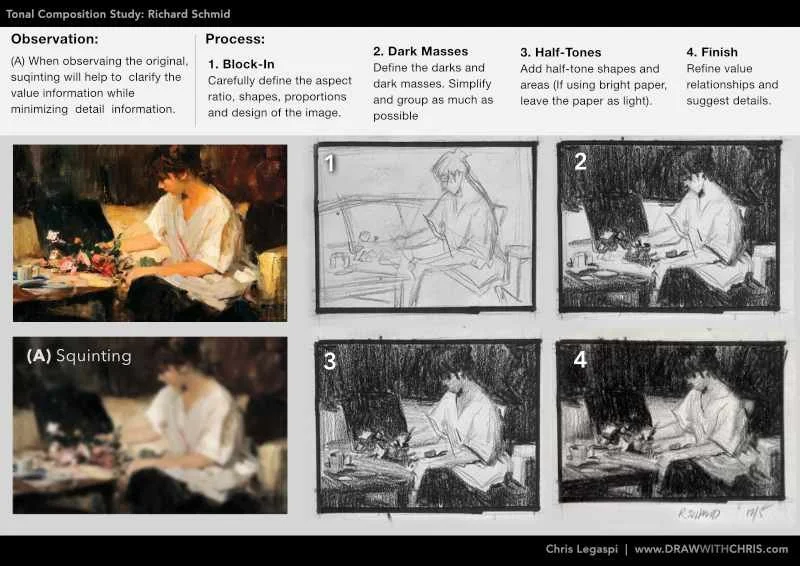
Enter your email below to download this high resolution and printable version.👇
Why This Composition Exercise Works
Richard Schmid’s paintings are a masterclass in:
Clear and simple value masses
Controlled contrast and conscious design
Strong focal points with pleasing eye-flow
When you strip away color and detail, what’s left is structure. That’s exactly what this exercise trains.
By reducing the image to a small tonal sketch, you force yourself to answer the most important compositional questions early:
Where is the light?
Where is the dark?
What matters most?
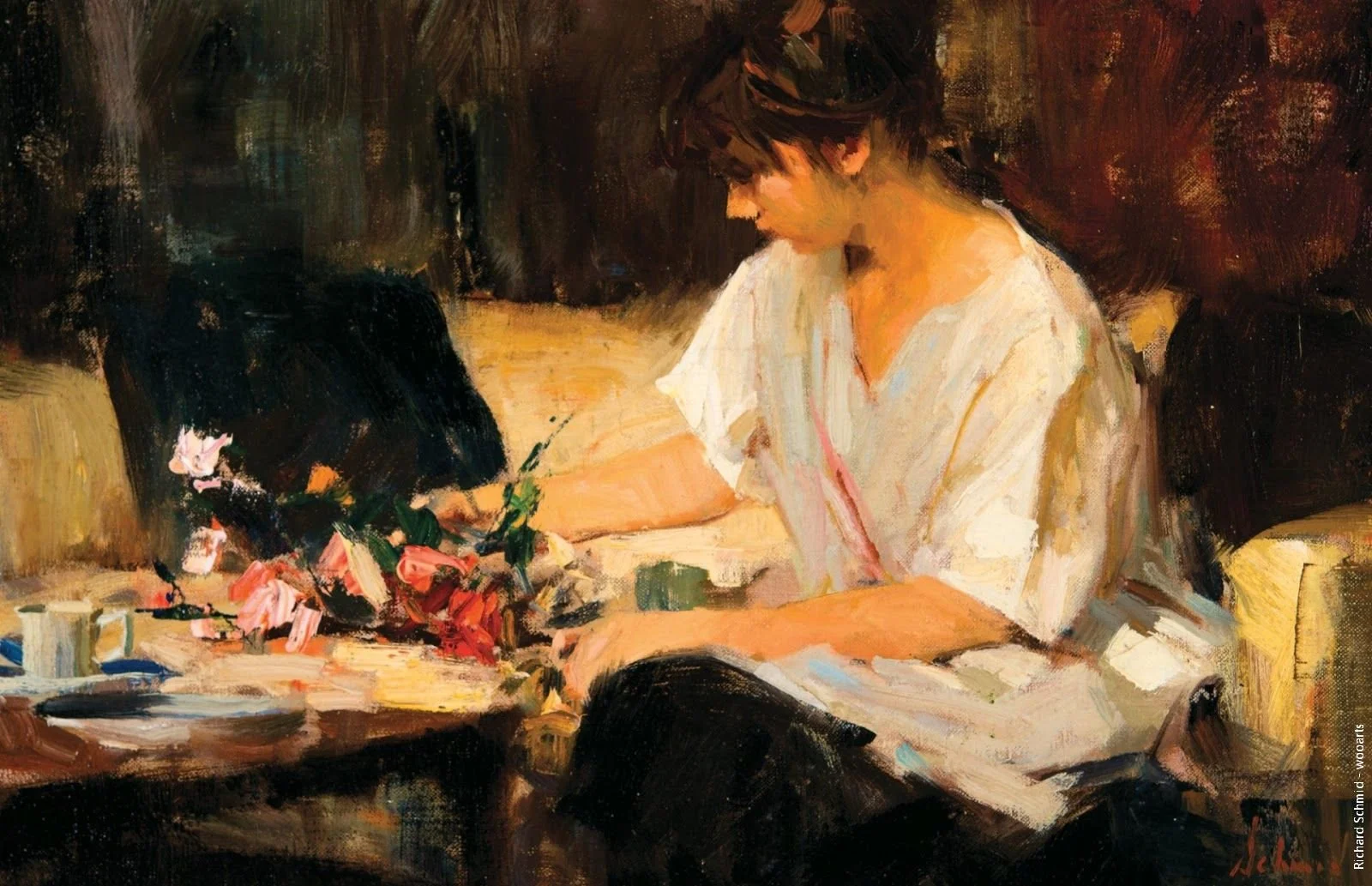
“Jacque's Roses” by Richard Schmid
Step 1: Block-In Shapes
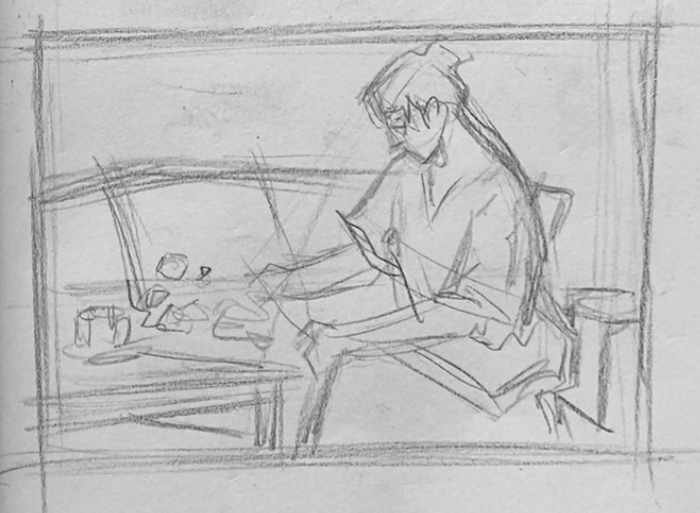
For this exercise, I like to work small, about 2-3” max (5-8 cm). This immediately removes the temptation to chase detail. At this scale, you can only focus on:
Big shapes
Overall proportion
Light vs. dark relationships
Think of this as a value map, not a drawing. If the composition works here, it will work at any size. That’s the key lesson in picture making.
I first try to match the aspect ratio of the painting as closely as possible. Then I carefully match the original’s shapes, design, proportions and placement.
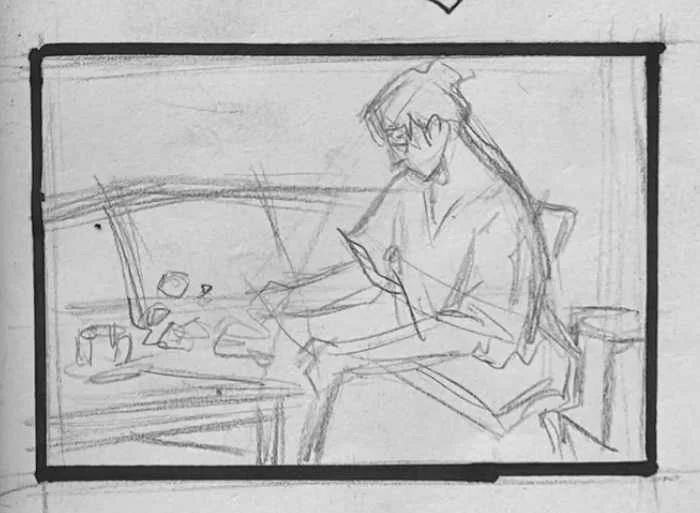
Once I have an accurate block-in, I like to define the border. Here I use a black Sharpie marker and a traingle to make the border dark and sharp. This helps to stay focused on the next stages of the study.
Step 2: Establish the Dark Masses
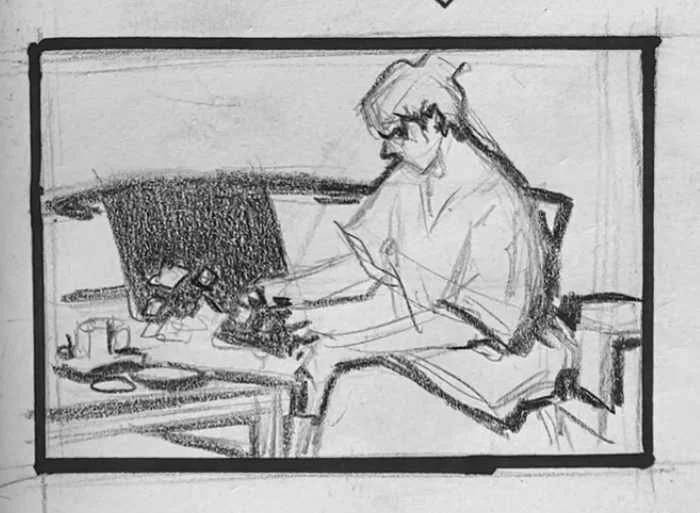
Next, I identify and group the darkest values. This is one of the most important steps. Instead of drawing individual objects, shapes and details, I look for opportunities to:
Merge shadows and darks together
Simplify shapes
Create one or two dominant dark masses
Strong compositions often rely on fewer, larger value groups, not many small, scattered darks, and this painting is a great example of that. In this painting, the first darks I notice are the black square on the couch and the woman’s skirt.
Well designed dark masses like this are a hallmark of American realism, and a sign of skill and mastery in composition.
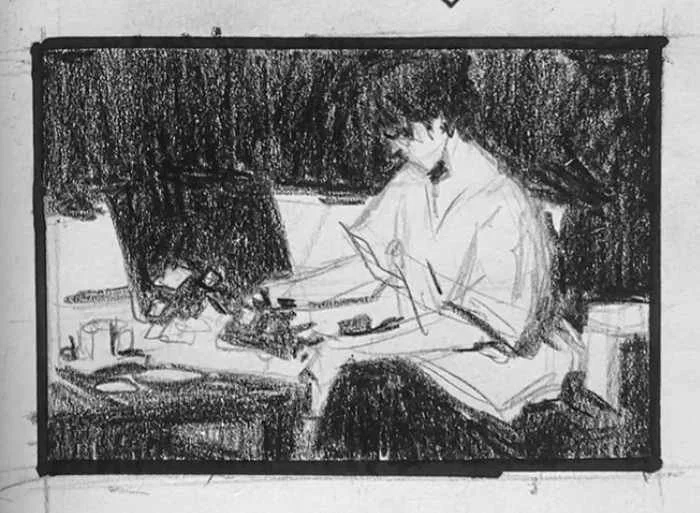
Step 3: Develop the Half-Tones
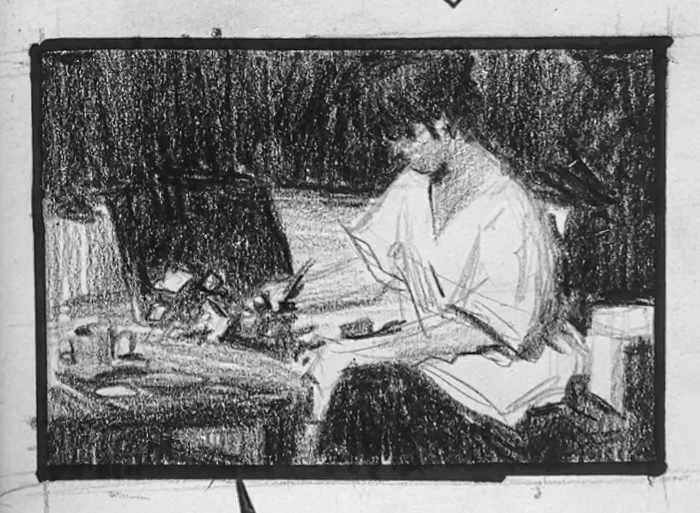
Once the darks are clear, I carefully introduce the half-tones. These mid-values act as a bridge between light and shadow and help describe form without stealing attention from the main design.
At this stage, restraint is key. If the half-tones get too busy or contrasty, they weaken the composition instead of supporting it.
This painting is mostly a 2 value, high contrast design with very little half-tone shapes. Here I mostly focus on the figure’s skin, clothing and the objects on the table.
Step 4: Refine Values and Suggest Details
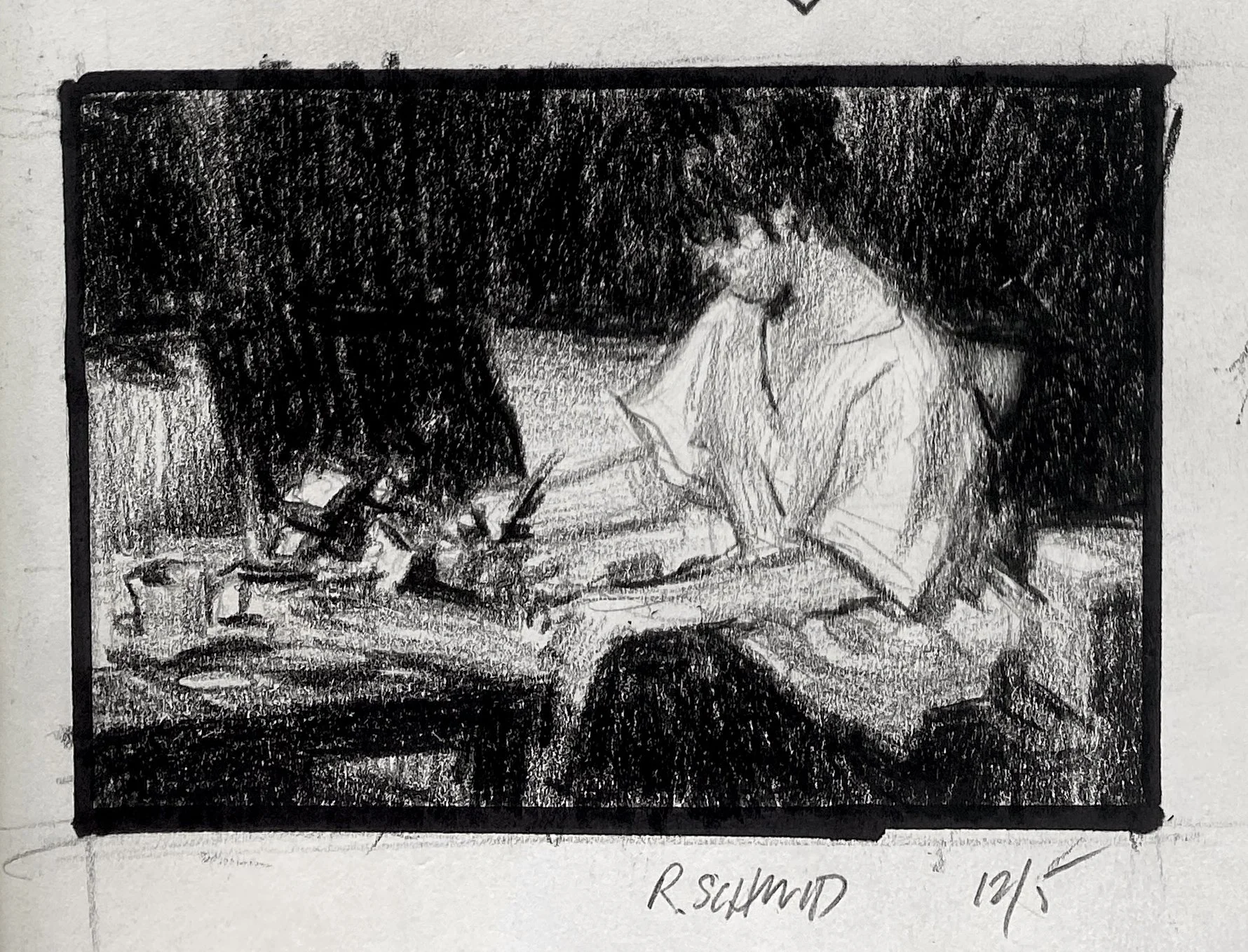
Finally, I refine my shapes and value relationships throughout the composition. I want to be as focused and true to the original as possible here. Getting the value relationships is a big part of the lesson I want to learn from this master work.
Since the painting is very high contrast, I can simply leave the white of the paper to suggest lights and small details.
Final Thoughts
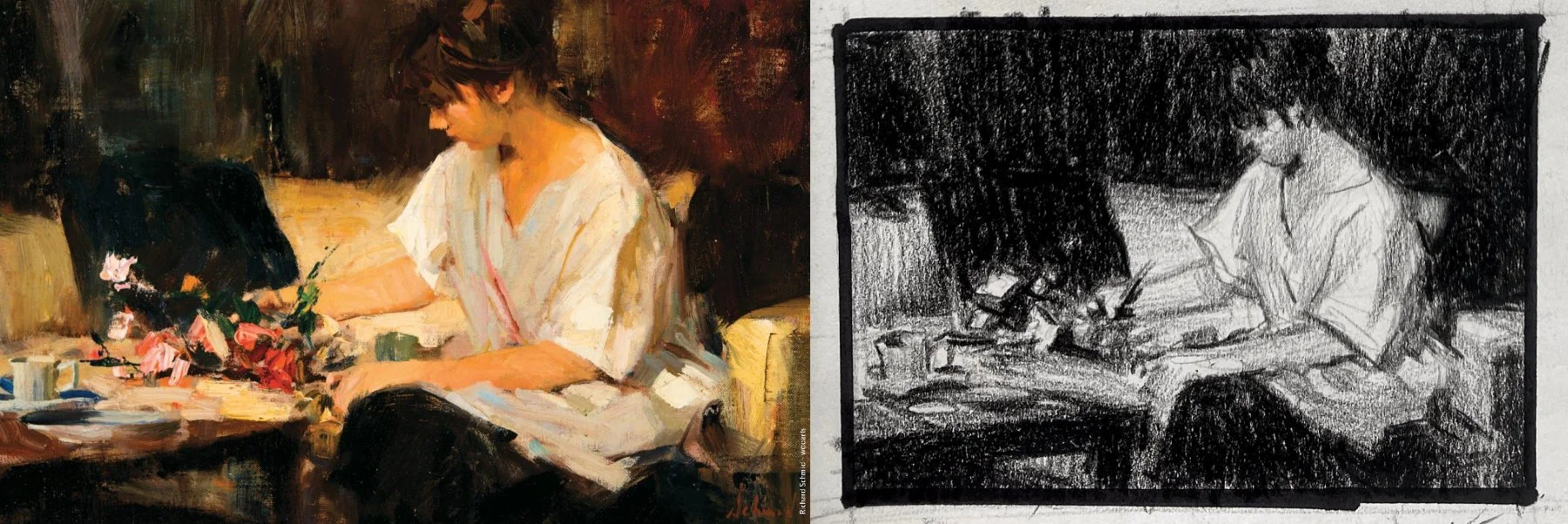
Composition doesn’t have to be complicated. When you train your eye to see simple value relationships, your work naturally becomes stronger, clearer, and more intentional.
Try this exercise with different master paintings, photos, or even your own past work. Keep it small. Keep it simple. Let the values do the work.
Want to Practice More Composition?
Composition is like a muscle, it takes practice and repetition to get right. If you want more full length lessons on composition, I have a massive playlist of full length classes on my Youtube channel.
If you want to follow along with me, I have a high-res, printable handout so you can review and study. 👇
This handout and more are available free for members of Studio Insider email list. Enter your email below to download and get instant access…